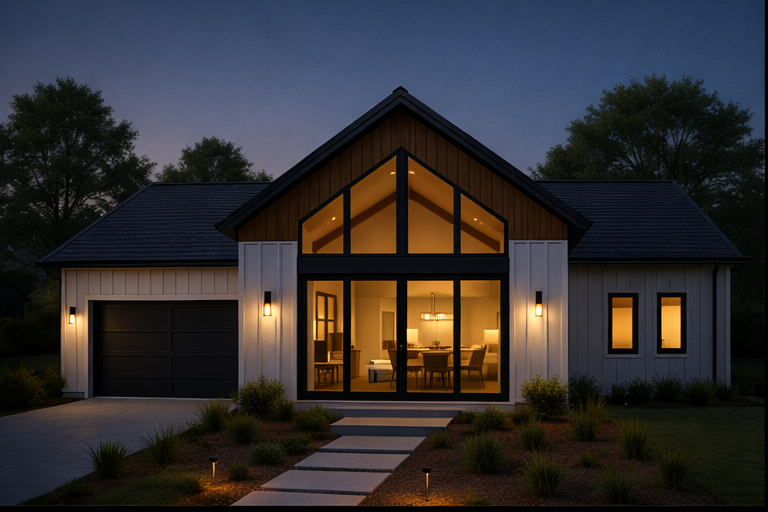
More living space.
Designed around your property.
Start with one of WL3 Designs' signature ADU concepts or begin from a blank sheet. Every project is adapted to the actual lot, jurisdiction, utilities, site constraints, and professional requirements that affect approval.
How big can we go on your property?
Start with the property address and the tool will attempt to pull the recorded parcel size, main-home living area, and jurisdiction automatically from public property data. It then applies the selected area's preliminary ADU framework and shows which WL3 concepts—or a custom ADU—are worth testing.
The property record does not match the city currently selected.
Property not found? Enter the two numbers manually instead.
This calculator relies on public parcel records and published jurisdiction information that can change, lag behind recent permits or property changes, or occasionally be incomplete. Once you send your property-fit result to WL3 Designs, we independently re-check the property using the current records available at the time of review before relying on the result for design. That verification can include the parcel record, actual reviewing jurisdiction, zoning and current ADU rules, setbacks, lot coverage, easements, utilities, existing improvements, and other site-specific conditions. If the online data cannot be confirmed or conflicts with current records, WL3 verifies the property manually before making a project recommendation.
Four signature concepts. Custom is always an option.
Compare the current WL3 concepts, open the floor plans, move through the renderings, and use the closest model as the beginning—not the end—of the design. If none of them fits the property or the way you want to live, WL3 also designs fully custom ADUs from a blank sheet.
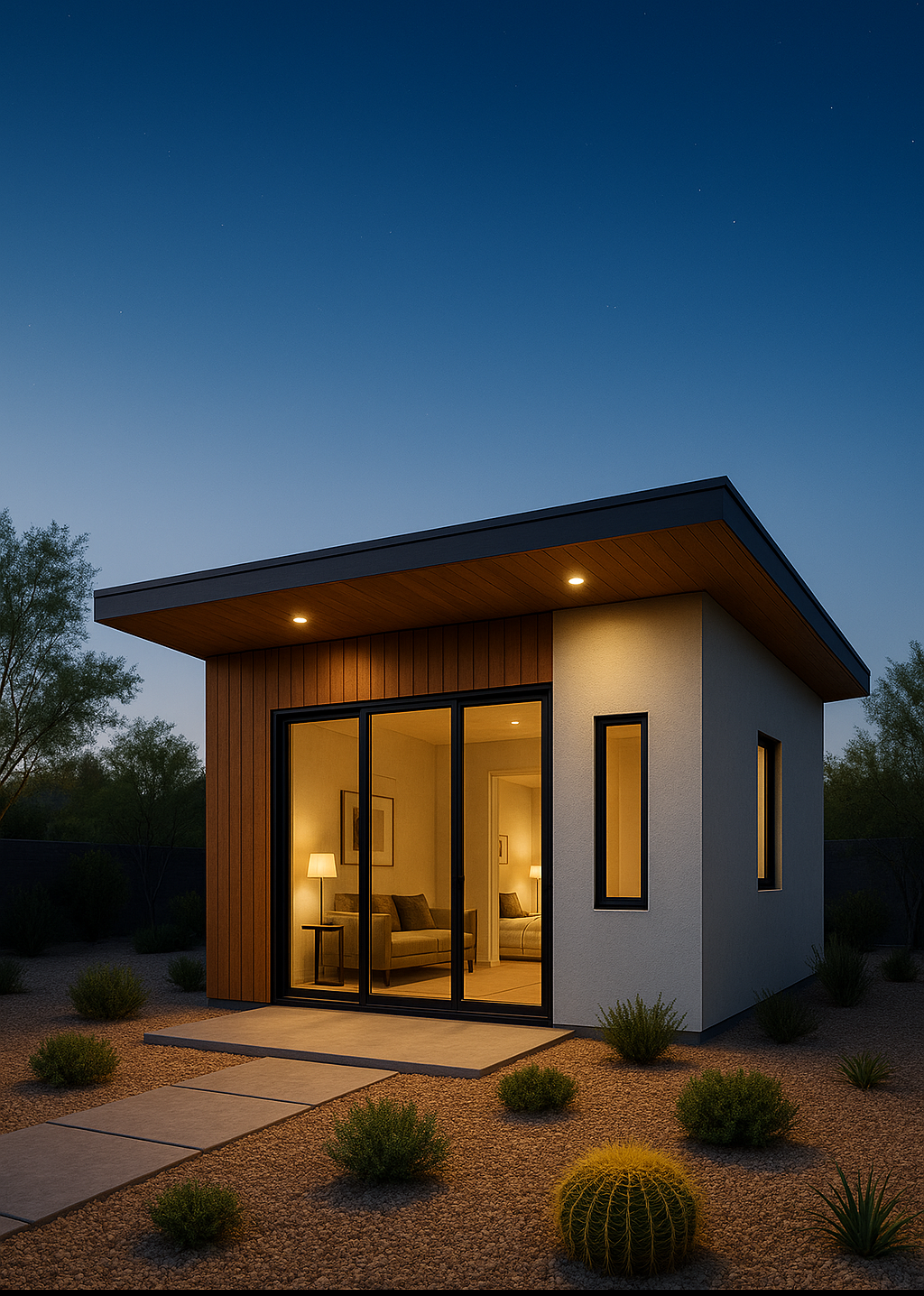
Solaris 480
Starting fees reflect the current WL3 model page and can change with site conditions, jurisdiction, scope, consultant requirements, and customization.
A custom ADU starts with the actual site, program, architecture, and budget instead of forcing the property into a preset footprint. Custom ADU pricing is project-specific because the design scope, size, complexity, and required professional coordination vary.
| Model | Size | Footprint | Program | Starting WL3 fee |
|---|---|---|---|---|
| Solaris 480 | 480 SF | 16' × 30' | 1 bed / 1 bath | $9,950 |
| Summit 750 | 750 SF | 25' × 30' | 1 bed / 1 bath + laundry | $11,950 |
| Oasis 900 | 900 SF | 30' × 30' | 2 bed / 1 bath | $13,250 |
| Vertex 1200 | 1,200 SF | 30' × 40' | 2 bed / 2 bath* | $14,950 |
| Custom ADU | Site-specific | Designed to property | Tailored program | Call for pricing |
Arizona opened the door. The property still decides the path.
Arizona law now requires municipalities to allow ADUs on lots where single-family dwellings are allowed, but building codes, fire and health requirements, easements, utilities, lot coverage, and local development standards still matter.
Source: Arizona Revised Statutes § 9-461.18. This is general information, not a property-specific zoning determination.
How ready is your property information?
This does not determine whether an ADU is allowed. It tells you whether WL3 has the basic information needed to start evaluating the site efficiently.
The floor plan is only one piece of the permit set.
A model can solve the layout quickly. The real work is adapting it to the parcel and coordinating the pieces the AHJ expects for that specific project.
Make sure the concept actually fits the parcel.
Before a model becomes a project, WL3 checks the property information that can affect placement and scale. That may include the governing jurisdiction, lot coverage, setbacks, easements, existing structures, access, and site constraints.
From “could this fit?” to a coordinated permit package.
The exact scope changes by property and AHJ, but the sequence should stay disciplined.
Identify the jurisdiction, available records, site conditions, and what information is still missing.
Test placement, size, access, utilities, constraints, and the likely professional disciplines required.
Adapt the selected concept—or create a custom plan—to the owner's goals and actual site.
Integrate structural, MEP, civil, or other licensed-professional input where required.
Assemble the jurisdiction-specific package and support revisions or comments included in the scope.
The questions we want answered before design gets expensive.
The goal is not to make the project complicated. It is to identify the complications early enough to design around them.
Have an address? That's enough to start the conversation.
Send WL3 the property address, what you want the ADU to accomplish, and any survey, site plan, or existing drawings you already have. We can begin by identifying what should be verified before the design moves too far.