7 Architect Commercial Trends Shaping Modern Spaces in 2026
The world of architect commercial spaces is transforming faster than ever, reshaping how we work, shop, and connect in 2026. Innovative design, cutting-edge technology, and shifting societal needs are driving this change, making it essential for industry leaders to stay ahead.
This article uncovers the top seven architect commercial trends that are redefining the experiences of businesses, developers, and communities. Staying informed about these trends is crucial for anyone aiming to create spaces that inspire and thrive.
From adaptive reuse to digital integration, you’ll discover actionable insights and strategies to future-proof your projects. Ready to see what’s shaping tomorrow’s most dynamic environments? Dive in and explore the trends architects cannot afford to ignore.
The Evolving Landscape of Commercial Architecture
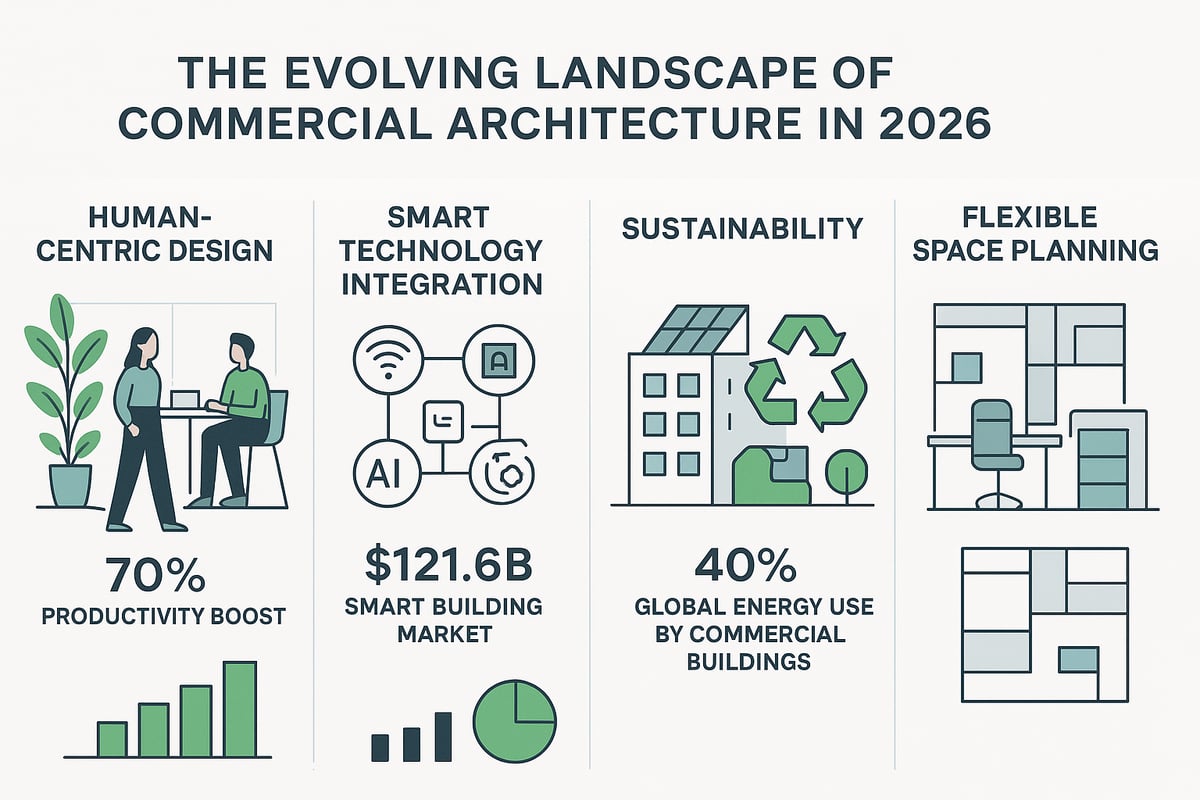
The world of architect commercial design is shifting rapidly, responding to new expectations and global challenges. As we look to 2026, four dominant forces are reshaping how these spaces are conceived, built, and experienced. Each trend carries distinct benefits for those ready to embrace them, offering both immediate improvements and long-term value.
The Shift Towards Human-Centric Design
A clear transformation is underway in architect commercial spaces, prioritizing the well-being and comfort of every occupant. Human-centric design now means maximizing natural light, integrating biophilic elements like living walls, and creating inviting green spaces that foster productivity.
Notably, global firms are championing people-first philosophies, embedding wellness features in both offices and retail environments. For example, open layouts with improved airflow and access to outdoor areas are becoming standard.
Industry surveys show impressive results: 70% of employees report higher productivity in these thoughtfully designed environments. This shift signals that architect commercial projects are no longer just about function, but about nurturing those who use them.
Integration of Technology and Smart Systems
Technology is redefining architect commercial environments. The rise of IoT, automation, and AI-driven building management is transforming everything from energy use to security. Advanced smart lighting and HVAC systems now adapt in real time, optimizing comfort and efficiency.
Forward-thinking companies are leveraging these tools to achieve operational gains and boost tenant satisfaction. For instance, predictive maintenance reduces downtime and long-term costs, while smart security ensures peace of mind.
The smart building market is on track to reach $121.6 billion by 2026, as highlighted in Smart building market growth projections. Clearly, the architect commercial sector must stay ahead, using tech to deliver sustainable, future-focused spaces.
Sustainability as a Core Principle
Sustainability drives every major architect commercial decision today. Clients now demand green certifications like LEED and WELL, pushing firms to innovate with recycled materials, high-efficiency systems, and advanced water conservation measures.
Zero-carbon and net-positive energy buildings are no longer rare, with notable projects achieving these ambitious goals worldwide. Regulatory pressure is mounting, but incentives and client expectations make sustainability not only necessary but rewarding.
Consider this: commercial buildings account for 40% of global energy use. This staggering figure highlights why every architect commercial project must address environmental impact and champion responsible design.
Flexibility and Adaptability in Space Planning
Flexibility is now a hallmark of successful architect commercial spaces. The post-pandemic landscape has made it essential to design environments that can adapt quickly to changing needs. Movable partitions, modular furniture, and convertible layouts enable spaces to shift between uses seamlessly.
Real estate trends show a preference for adaptable workspaces and retail footprints. Office buildings are increasingly designed for easy conversion to mixed-use, maximizing long-term asset value for landlords and tenants alike.
In this new era, architect commercial projects are judged by how well they support evolving business models, making flexibility a top priority for future success.
7 Architect Commercial Trends Shaping Modern Spaces in 2026
The commercial architecture landscape is undergoing a seismic shift. As we approach 2026, the architect commercial sector is embracing innovation, sustainability, and adaptability at an unprecedented pace. To stay competitive and future-proof, business owners, developers, and architects must understand and leverage the trends shaping tomorrow’s spaces.
Below, explore the seven architect commercial trends redefining how we design, build, and experience modern environments. These insights will empower you to make strategic decisions and lead the industry transformation.
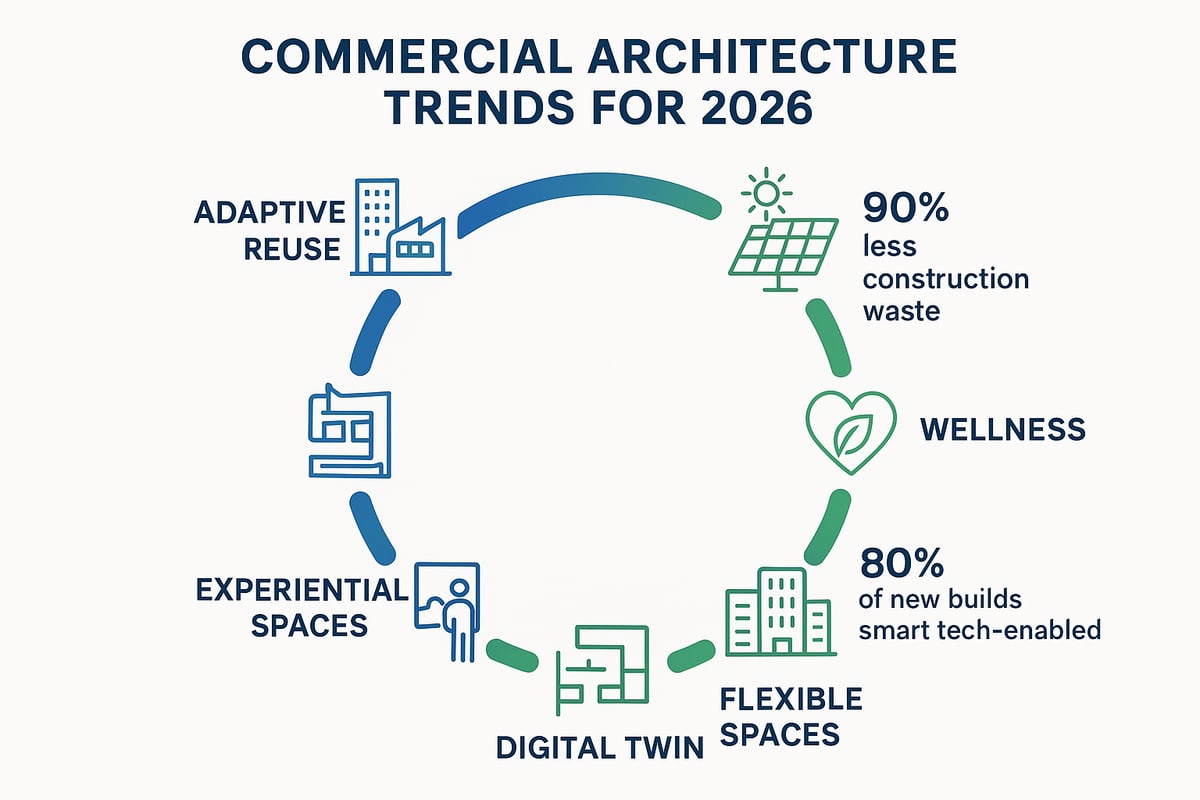
1. Adaptive Reuse and Repurposing of Existing Structures
Adaptive reuse is revolutionizing the architect commercial landscape. Instead of building from scratch, firms are transforming warehouses, factories, and old retail centers into vibrant commercial hubs. This trend is not just about aesthetics, but about environmental and economic responsibility.
Repurposing existing structures minimizes construction waste, with some projects reducing waste by up to 90%. It also preserves cultural heritage, breathing new life into historic buildings and engaging the community. For example, many cities are seeing historic factories converted into co-working spaces and boutique hotels, blending old-world charm with modern amenities.
Key benefits include:
- Significant reduction in carbon footprint and landfill use
- Cost savings on materials and demolition
- Accelerated project timelines due to existing infrastructure
However, architect commercial projects in adaptive reuse face challenges. Structural retrofitting, ensuring code compliance, and maintaining heritage features require creative solutions and close collaboration with local authorities. Despite these hurdles, the surge in adaptive reuse is driving urban revitalization and transforming neighborhoods.
For real-world inspiration, explore examples of adaptive reuse that have reshaped city skylines by visiting [Explore Our Commercial Projects].
2. Net-Zero and Carbon-Positive Commercial Buildings
Sustainability is no longer optional in architect commercial design. The movement toward net-zero and carbon-positive buildings is accelerating as businesses and cities set ambitious climate goals. Net-zero means a building produces as much energy as it consumes, while carbon-positive buildings actually give back to the grid.
Key strategies include:
- Installing solar panels and geothermal systems
- Using advanced insulation and high-performance windows
- Integrating smart energy management and water conservation
Notable architect commercial projects have achieved net-zero status through innovative engineering and design. Offices are now leveraging on-site renewable energy, while regulatory changes and financial incentives make these solutions more accessible.
The benefits are compelling. Lower operating costs, brand leadership in sustainability, and compliance with evolving regulations enhance property value and reputation. According to recent data, 60% of Fortune 500 companies have set carbon neutrality goals for 2026, making this trend critical for future-focused architect commercial projects.
3. Wellness-Driven Workspaces and Amenities
Employee well-being is now central to architect commercial design. Wellness-driven workspaces prioritize both physical and mental health, recognizing their direct impact on productivity and company culture.
Key features include:
- Touchless technology for hygiene and convenience
- Improved air quality through advanced filtration and ventilation
- Use of natural materials, biophilic elements, and abundant daylight
- On-site fitness centers, meditation rooms, and outdoor terraces
WELL-certified buildings are commanding higher lease rates and occupancy, as tenants seek spaces that support holistic health. Real-world examples include offices with living walls, flexible wellness zones, and spaces designed for movement and relaxation.
Leading architect commercial firms are seeing measurable benefits: increased employee retention, higher productivity, and stronger corporate identity. As businesses compete for talent, wellness-focused amenities are becoming a powerful differentiator.
4. Hyper-Connected Smart Buildings
Technology is transforming the architect commercial sector with hyper-connected smart buildings. These structures leverage advanced building management systems (BMS) and IoT devices to enhance efficiency, security, and tenant experience.
Smart features include:
- Predictive maintenance to prevent costly breakdowns
- Automated climate control for optimal comfort and energy savings
- Integrated security systems for safety and peace of mind
Commercial campuses are deploying digital infrastructure that enables real-time monitoring and adjustment. The result is reduced operational costs, improved energy performance, and personalized environments for tenants.
According to industry projections, 80% of new architect commercial builds in 2026 will feature smart tech integration. However, this trend brings challenges such as data privacy, cybersecurity, and the need for system interoperability. Overcoming these hurdles is crucial to unlocking the full value of smart buildings.
5. Flexible and Hybrid Use Spaces
The demand for flexibility is reshaping architect commercial design. Businesses want spaces that can evolve with changing needs, especially in a world shaped by remote work and shifting retail patterns.
Flexible and hybrid use spaces blend offices, retail, hospitality, and even residential components. Architect commercial projects now feature:
- Modular construction for easy reconfiguration
- Shared amenities to maximize utility and community
- Layouts adaptable to pop-up events, co-working, or mixed-use
This approach benefits landlords through increased foot traffic and diversified revenue streams. Data shows that 65% of urban commercial developments now include hybrid-use elements, reflecting a shift toward future-proof investments.
The convergence of work, retail, and community life is creating architect commercial spaces that can pivot quickly, ensuring long-term asset value and tenant satisfaction.
6. Experiential and Branded Environments
Experience is at the heart of the next architect commercial revolution. Branded environments are designed to immerse visitors and tenants, forging emotional connections and boosting loyalty.
Architect commercial strategies for experiential spaces include:
- Storytelling through architecture and interior design
- Interactive technology like AR/VR and digital displays
- Sensory design elements that engage sight, sound, and touch
Flagship stores, themed hotels, and innovative offices are leading the way. These environments see 30% higher sales per square foot, as customers and employees are drawn to memorable interactions.
Architects play a key role in crafting brand narratives. By weaving identity into every aspect of a space, architect commercial projects become powerful tools for differentiation and engagement.
7. Digital Twin and Virtual Design Integration
Digital twin technology is the cutting edge of architect commercial innovation. By creating real-time virtual replicas of buildings, teams can optimize design, construction, and facility management.
Benefits of digital twin integration include:
- Real-time monitoring for predictive maintenance and efficiency
- Data-driven decision-making for lifecycle optimization
- Enhanced tenant engagement through interactive platforms
Case studies show that commercial developments using BIM (Building Information Modeling) and digital twins achieve faster delivery and lower maintenance costs. Adoption is set to double by 2026, making this a trend every architect commercial professional should watch.
Challenges remain, including upfront investments, data integration, and the need for specialized training. However, the long-term gains in efficiency, sustainability, and value are undeniable.
Regional and Global Influences on Commercial Architecture
As the world becomes more interconnected, the architect commercial landscape is evolving rapidly. Regional differences and global influences are shaping how trends take root, offering both challenges and opportunities for industry leaders.
Regional Differences in Trend Adoption
Architect commercial trends rarely unfold at the same pace worldwide. In North America, flexible workspaces and adaptive reuse are gaining traction, driven by shifting business models and urban renewal efforts.
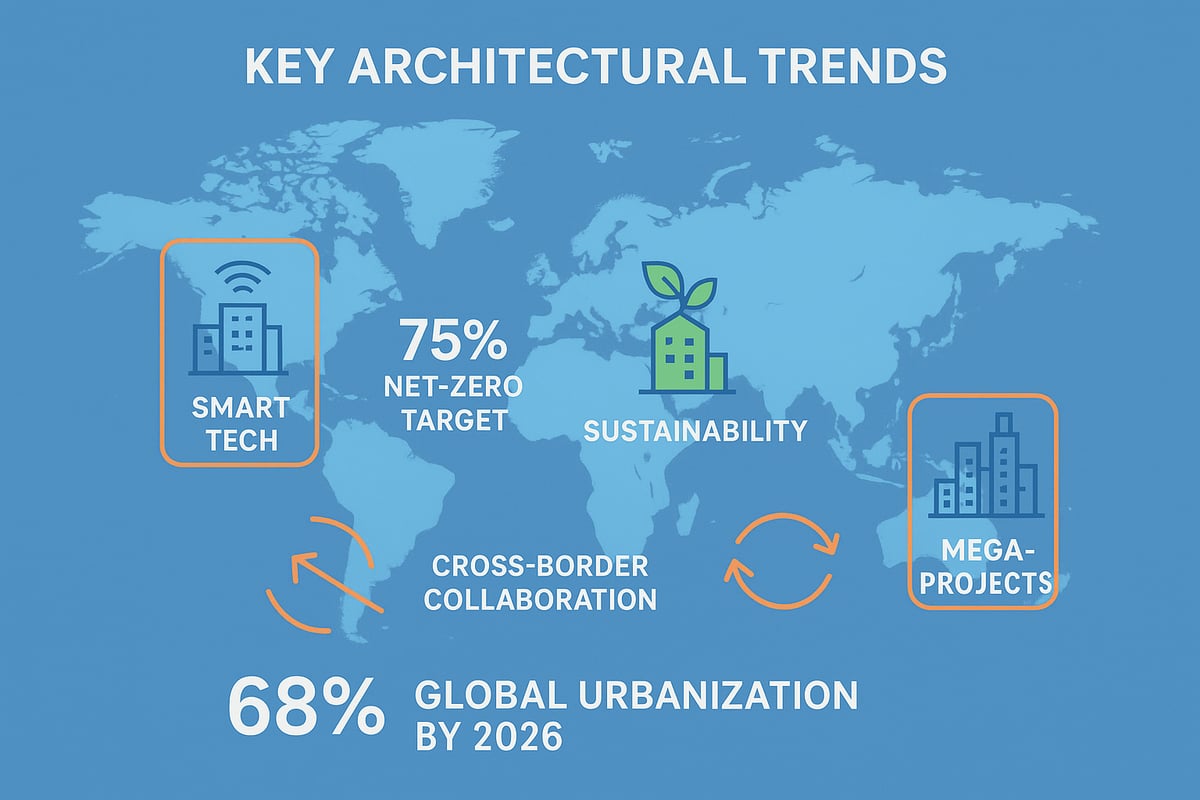
Europe leads in sustainability, with 75% of new commercial builds targeted for net-zero by 2026. Strict regulations and a strong environmental ethos push the envelope for green design. Meanwhile, in Asia-Pacific, smart building technology is at the forefront, with cities like Singapore and Tokyo integrating IoT and automation into commercial spaces. Latin America is catching up, focusing on climate resilience and cost-effective architect commercial solutions.
A side-by-side comparison:
| Region | Leading Trend | Notable Feature |
|---|---|---|
| North America | Flexibility, reuse | Mixed-use, adaptive projects |
| Europe | Sustainability | Net-zero regulations |
| Asia-Pacific | Smart tech integration | IoT, automation |
| Latin America | Climate resilience | Affordable, robust designs |
For deeper thought leadership on these evolving patterns, explore [Insights into Architectural Excellence].
Globalization and Cross-Border Design Collaboration
The architect commercial industry is experiencing a wave of globalization. International design firms are bringing best practices to new markets, blending innovation with local context. For example, European sustainability standards are being adapted in North American projects, while Asian smart-tech solutions influence developments in other regions.
Cross-border partnerships foster creativity and knowledge sharing. These collaborations lead to designs that are not only innovative but also culturally and environmentally responsive. The result is a dynamic architect commercial sector that benefits from diverse perspectives and shared expertise. This global approach accelerates the adoption of future-focused strategies, ensuring spaces meet both regional needs and international benchmarks.
Urbanization and the Rise of Mega-Projects
Urbanization is accelerating at a record pace, putting pressure on architect commercial professionals to deliver large-scale, integrated developments. By 2026, 68% of the global population will live in urban areas, fueling demand for mixed-use complexes, transit hubs, and high-density commercial spaces.
Mega-projects now feature public amenities, green infrastructure, and smart city technologies. These developments reshape skylines and drive economic growth, but also require careful planning to balance density with livability. As cities grow, architect commercial solutions must prioritize connectivity, sustainability, and adaptability.
The Role of Commercial Architects in Shaping Future Cities
Commercial architects are at the forefront of shaping tomorrow's urban environments. Their influence extends from policy advocacy to leading public-private partnerships for city regeneration. By integrating sustainable materials, smart systems, and flexible layouts, architect commercial professionals set new standards for resilience and innovation.
Examples abound of architects driving city-scale transformations, creating spaces that support community well-being and economic vitality. The expectations for architect commercial roles will only grow, as cities seek leaders who can balance design excellence with social and environmental responsibility. For more on sustainable regional trends, see Sustainability in commercial design.
Future Outlook: Challenges and Opportunities for Architects
As the architect commercial landscape transforms, professionals must be nimble to thrive. The future is promising, but staying ahead means tackling both familiar and new challenges. Let’s explore the key areas shaping tomorrow’s opportunities.
Navigating Regulatory Changes and Compliance
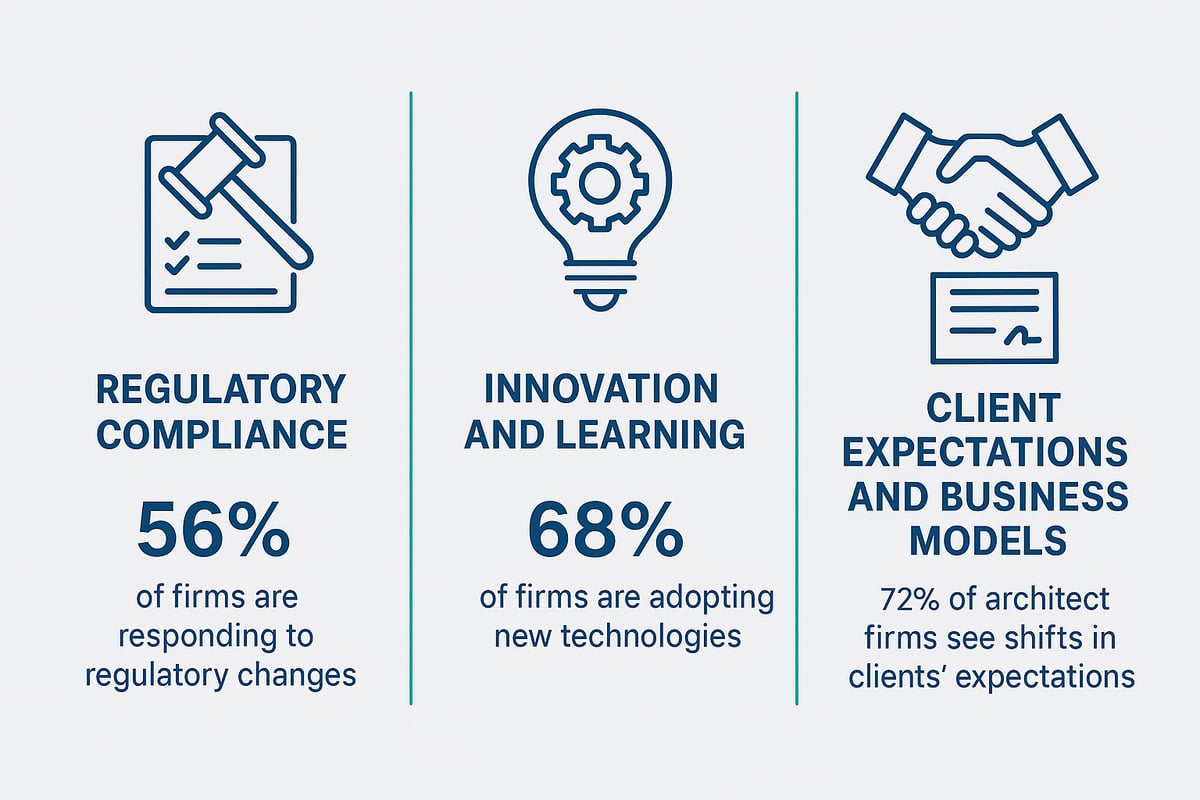
Staying compliant is more complex than ever for any architect commercial expert. Regulations around energy efficiency, accessibility, and health standards are evolving rapidly. This means constant vigilance and proactive strategies are essential.
Successful firms are:
- Tracking new building codes and green mandates.
- Collaborating with legal and engineering teams.
- Leveraging digital tools to automate compliance checks.
Government incentives can provide an edge, but failing to meet new standards can risk penalties and lost business. The most successful architect commercial practices are those that turn compliance into an opportunity for differentiation.
Embracing Innovation and Continuous Learning
The architect commercial world is being reshaped by new technologies and methodologies. Embracing this change is no longer optional, it’s a competitive necessity.
Firms leading the way invest in:
- Training staff on digital tools and AI-driven design.
- Researching sustainable materials and smart systems.
- Building cultures that reward experimentation.
Real-world examples show that firms who prioritize innovation attract top talent and win future-focused projects. For architect commercial success, continuous learning is the bridge to long-term relevance.
Evolving Client Expectations and Business Models
Clients now demand more from every architect commercial project. They want transparency, speed, and measurable value. This shift calls for new business models and a strategic mindset.
Key strategies include:
- Offering design-build and integrated project delivery.
- Providing lifecycle consulting, not just design.
- Adopting outcome-based pricing and reporting.
Firms that deliver innovative results and guarantee client vision fulfillment, like those described in the Vision Fulfillment Guarantee, are setting themselves apart. Meeting evolving demands means architects become trusted partners, not just service providers.
As you’ve just seen, commercial architecture in 2026 is moving fast—embracing sustainability, smart tech, and human-centric spaces to shape the future of how we live and work. If you’re inspired by these trends and want your next project to stand out, why not take the next step? At WL3 Designs, we help bring innovative ideas to life with expert feasibility studies, coordinated engineering, and permit-ready plans tailored to your needs in the U S or Costa Rica. Ready to see what’s possible for your space? Schedule A Consultation
and let’s start shaping your vision together.
WL3 Designs Blog