Guide to Azuma House Tadao Ando: Design, Legacy & Inspiration
The azuma house tadao ando is more than just a building, it is a revolutionary statement that redefined urban living in postwar Japan. Its striking minimalist concrete form has become an icon, admired by architects and design enthusiasts across the globe.
In this guide, we will uncover the design secrets, lasting legacy, and powerful inspiration behind azuma house tadao ando. You will explore its historical context, design philosophy, groundbreaking innovations, and its influence on modern architecture.
Curious about how a small urban dwelling became a worldwide architectural touchstone? Dive in to discover the creative process of Tadao Ando, the lived experience within these walls, and why azuma house tadao ando still shapes the future of residential design.
Historical Context and Background of Azuma House
The Urban Landscape of 1970s Osaka
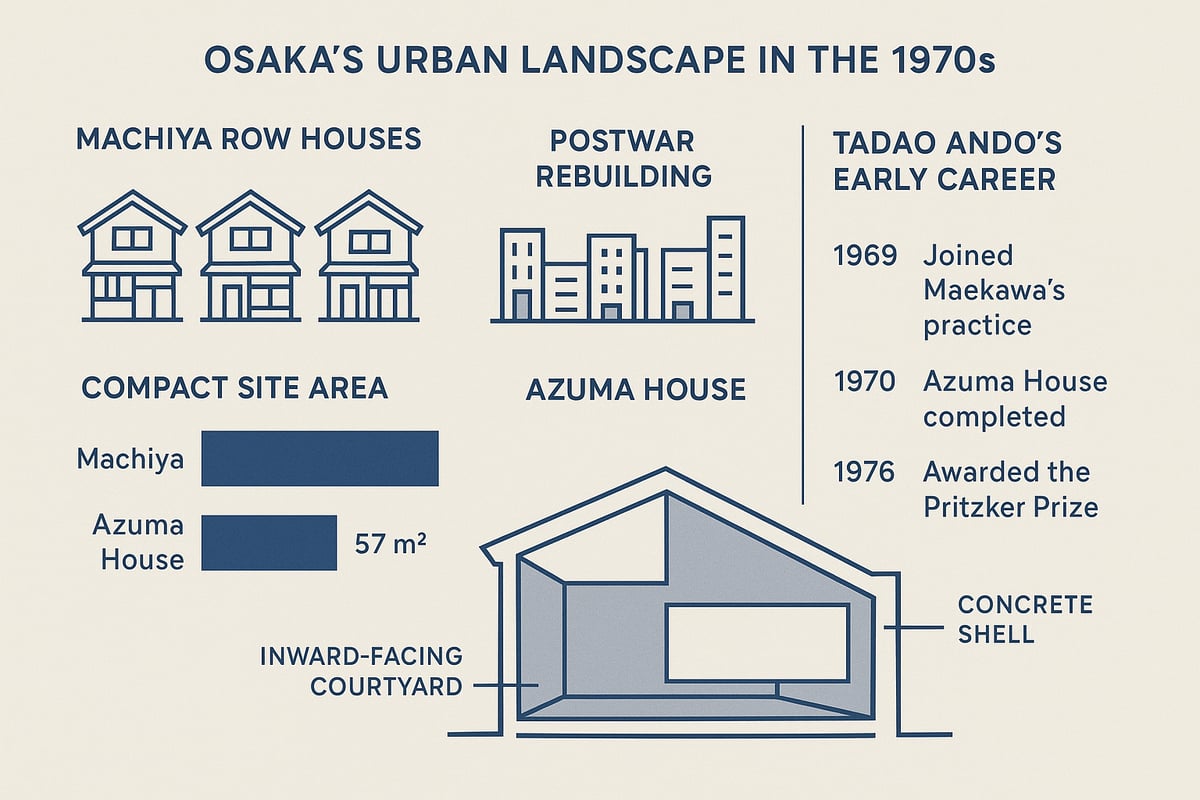
In the 1970s, Osaka was a city in flux. Rapid urbanization led to dense neighborhoods filled with traditional machiya row houses. These homes, known for their wooden construction and narrow, elongated plots, shaped the city’s residential fabric.
World War II left scars on Osaka’s cityscape. Many neighborhoods were rebuilt quickly, resulting in crowded districts with little privacy. Residents yearned for refuge from the bustling streets and intrusive noise.
The site for azuma house tadao ando was just 57 square meters, much smaller than the typical residential lot. This compact footprint forced architects to innovate. Privacy became a prized commodity, driving new approaches to urban living.
| Site Comparison | Machiya Average | Azuma House Site |
|---|---|---|
| Area (sqm) | 90-100 | 57 |
| Street Frontage | 5-7m | 5.2m |
Osaka’s transformation set the stage for a bold reimagining of home design.
Tadao Ando’s Early Career and Influences
Before azuma house tadao ando became a global touchstone, Tadao Ando’s path was unconventional. He had no formal architectural education. Instead, Ando taught himself by reading, traveling, and closely observing both traditional Japanese and modern Western architecture.
Ando was influenced by masters like Le Corbusier and Mies van der Rohe, but also drawn to Japan’s own architectural heritage. His travels across Europe and Asia deepened his appreciation for spatial purity and simplicity.
In 1969, he founded Tadao Ando Architect & Associates. Early projects were modest, but each reflected his evolving design philosophy. Azuma House would soon become the pivotal project that propelled his career forward.
Commission and Conceptual Genesis
The commission for azuma house tadao ando came with a clear brief: create a small, private residence for a young family. The plot was a narrow strip wedged between party walls, challenging any conventional approach.
Ando decided to reinterpret the traditional Japanese home using contemporary materials. He responded to the “hostile” urban environment by turning the house inward, prioritizing privacy and introspection. As Ando famously stated, “Current homes cannot have openings to the outside.”
The result was a radical, minimalist dwelling centered around a courtyard. For a deeper dive into design concepts and spatial organization, see this Azuma House architectural analysis.
Significance as a Turning Point
The completion of azuma house tadao ando in 1976 marked a turning point in Japanese architecture. The project received critical acclaim both in Japan and abroad, heralding Ando’s arrival on the international stage.
Azuma House became a prototype for Ando’s later works, such as the Church of the Light. It bridged traditional Japanese concepts with modern building techniques, setting a new standard for urban residential design.
This project’s influence can still be seen in contemporary Japanese homes, where the balance of privacy, minimalism, and nature remains central. Azuma house tadao ando continues to inspire architects and urban dwellers seeking harmony amid the chaos of city life.
Design Philosophy and Architectural Innovations
The design philosophy of azuma house tadao ando is a masterclass in radical simplicity, transforming how we think about living in dense cities. Each element, from the layout to the materials, embodies Ando's intent to challenge conventions and create architecture that inspires reflection. Let’s explore the core innovations that make this residence iconic.
The Minimalist Approach: Form, Function, and Philosophy
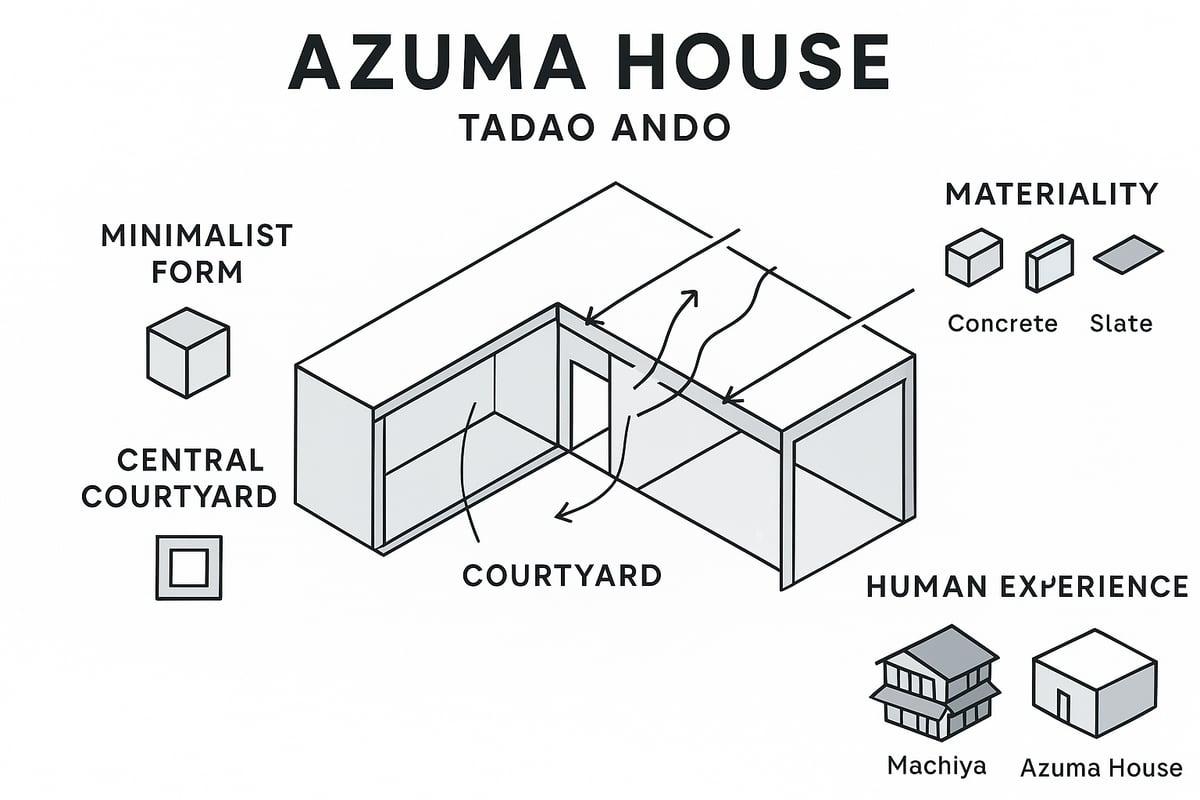
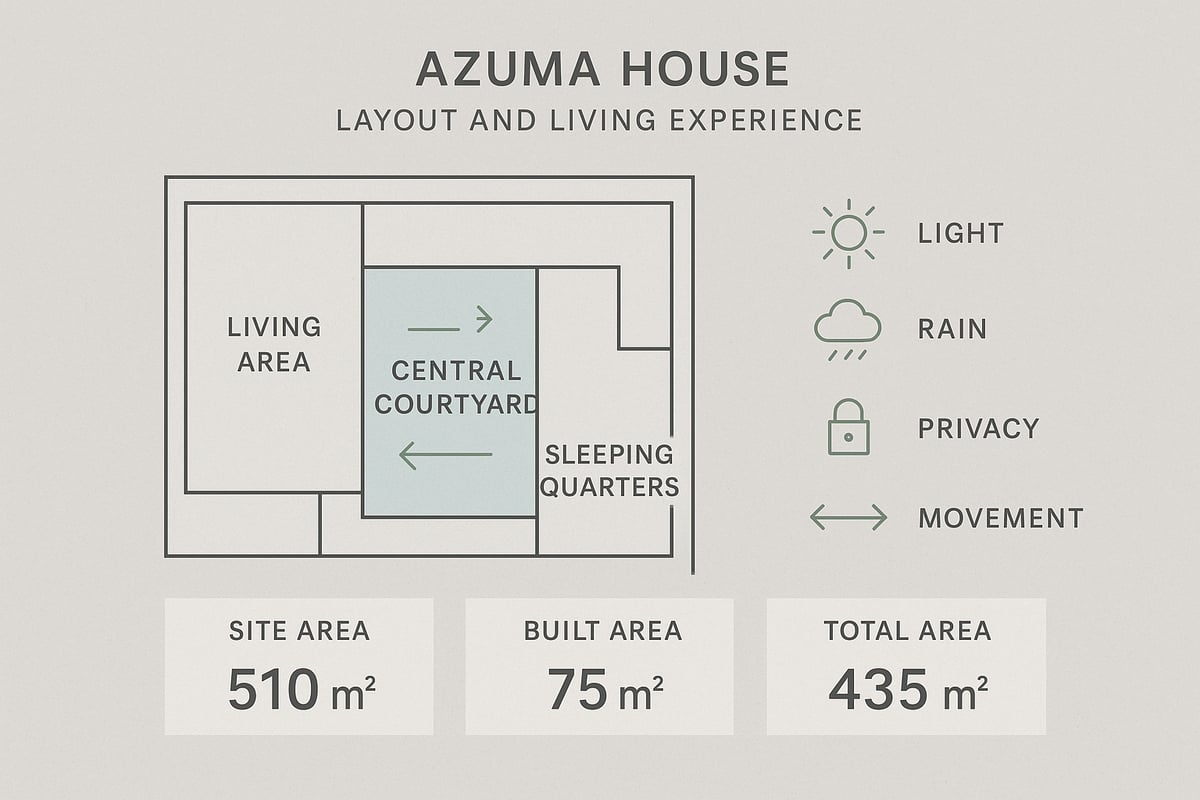
At its core, azuma house tadao ando represents a commitment to absolute minimalism. Ando rejected ornamentation, instead favoring a pure geometric form. The house is divided into three equal sections: a living area, a central open-air courtyard, and a sleeping zone. This tripartite plan echoes the traditional machiya, but with a bold, modern twist.
Unlike typical homes of its era, the exterior is a seamless concrete box, closed off to the bustling Osaka street. There are no exterior windows, only a recessed entry. This approach shields occupants from urban chaos, creating a sense of sanctuary.
Ando’s minimalist vision is not just aesthetic. It’s deeply functional, encouraging mindful movement and interaction with space. Residents must cross the courtyard to move between zones, turning daily routines into rituals. According to Tadao Ando's design philosophy, this blend of tradition and innovation defines the unique spirit of azuma house tadao ando.
The Central Courtyard: Nature, Light, and Void
The central courtyard is the beating heart of azuma house tadao ando. Instead of relying on views or gardens, Ando brings nature inside as pure elements: light, air, and rain. The courtyard acts as both a practical and symbolic void, illuminating interiors and providing vital ventilation.
Residents experience the changing seasons firsthand. Sunlight shifts across the walls, rain falls into the open space, and breezes cool the concrete shell. The courtyard is a daily axis for family life, expanding the limited floor area through openness and light.
By abstracting nature in this way, Ando redefines what it means to live “with” the environment, even when surrounded by dense urban fabric. The result is a living experience that is both contemplative and dynamic, making azuma house tadao ando a timeless model for urban homes.
Materiality: Concrete, Glass, and Slate
Material choices play a crucial role in the identity of azuma house tadao ando. Exposed reinforced concrete forms both the structure and the enclosure, offering a sense of solidity and security. The walls are smooth to the touch, yet visually heavy, amplifying the interplay of shadow and light.
Glass and slate are used sparingly, mainly to define the boundaries of the courtyard and allow glimpses of sky. The absence of exterior projections means no shadows fall onto the street, reinforcing the home’s introverted character.
Concrete here is not just a building material, but a statement. It symbolizes protection, introspection, and clarity of purpose. The recessed entry, for example, subtly reinterprets the traditional Japanese threshold, welcoming visitors into a world apart. Every detail in azuma house tadao ando is intentional, reflecting Ando’s philosophy of material honesty.
Spatial Experience and Human Interaction
Living in azuma house tadao ando is an exercise in mindful adaptation. The house introduces intentional friction between the safety of enclosure and the exposure to natural elements. Residents journey through spaces, sometimes braving wind or rain to cross the courtyard.
This daily ritual fosters a deeper awareness of time and weather. Minimalist interiors invite calm, while the compartmentalized plan balances privacy with openness. The design encourages restraint, prompting residents to live with less and find meaning in simplicity.
Ando himself described the home as “an image of my architecture,” capturing the emotional and psychological impact of space. For anyone interested in how architecture shapes experience, azuma house tadao ando stands as a living lesson in the power of thoughtful design.
Plans, Layout, and Living Experience
Step inside the world of azuma house tadao ando, and you’ll discover a radical approach to urban living that challenges every expectation. The home’s unique layout, centered on a transformative courtyard, shapes not just the structure but the daily rhythms, emotions, and experiences of its residents. Let’s break down how the plans and spatial organization of this iconic house redefine what it means to live in the heart of a bustling city.
Floor Plans and Organization
The floor plan of azuma house tadao ando is a masterclass in spatial clarity and efficiency. The ground floor houses the living room, kitchen, dining area, and bathroom, while the upper floor provides private bedrooms. What sets the house apart is its strict three-part division: a public living zone, an open-air courtyard, and a private sleeping area, all arranged in sequence from street to rear.
Movement through the home is linear and intentional. Residents must cross the central courtyard to access different zones, turning daily routines into mindful rituals. The courtyard isn’t just a passage—it’s the heart of the house, shaping every journey between rooms.
For those fascinated by floor plans, you can explore a variety of residential home plans category to see how modern architects reinterpret compact spaces, much like azuma house tadao ando.
Area Statistics Table
| Metric | Value |
|---|---|
| Site Area | 57 sqm |
| Built Area | 34 sqm |
| Total Area | 65 sqm |
Every square meter is maximized, with seamless flow between communal and private spaces.
The Role of the Courtyard in Daily Life
In azuma house tadao ando, the courtyard isn’t an afterthought—it’s the main event. This open void draws in sunlight and fresh air, transforming the interior into a living, breathing organism. No matter the season, the courtyard becomes a stage for daily rituals: crossing its open expanse in rain or shine, residents experience the elements firsthand.
Family life orbits around this central space. Meals, conversations, and quiet moments all gravitate toward the courtyard, turning a simple void into a powerful social and emotional anchor. The home’s modest footprint is amplified by the courtyard’s sense of openness, making the entire house feel larger and more dynamic.
What’s remarkable is how the courtyard compensates for the home’s small size, providing a sense of freedom and connection that’s rare in dense urban neighborhoods.
Light, Shadow, and Sensory Qualities
Light is an ever-changing character inside azuma house tadao ando. The central courtyard acts as both a lantern and a filter, channeling sunlight deep into the living spaces. Throughout the day, shifting shadows animate the concrete walls, creating a dynamic interplay of brightness and shade.
- Morning sun glows in the living room
- Afternoon light dances across the courtyard
- Rain and wind become sensory experiences, not just background noise
Residents don’t just see the weather—they feel it. The open courtyard exposes them to rain, breeze, and temperature changes, forging a deep connection between the built environment and the rhythms of nature. The mood of each room shifts with the time of day and season, turning ordinary moments into memorable experiences.
This sensory richness is a hallmark of azuma house tadao ando, inviting mindfulness and presence in everyday life.
Privacy, Security, and Urban Refuge
Azuma house tadao ando stands as a fortress of tranquility amid the chaos of Osaka. The exterior is hermetically sealed, with no street-facing windows, shielding residents from noise and prying eyes. This concrete shell offers unmatched privacy and a powerful sense of security.
At the same time, the courtyard creates a delicate balance between openness and enclosure. Inside, residents enjoy a private oasis, free from urban distractions. The design transforms the house into a true sanctuary, where one can retreat, recharge, and reconnect with what matters most.
This unique approach addresses the challenges of city living, proving that even the densest neighborhoods can offer spaces of peace and refuge. In azuma house tadao ando, privacy and openness are not opposites—they’re partners in creating a new standard for urban homes.
Azuma House’s Legacy in Modern Architecture
Azuma house tadao ando is not just a celebrated residence—it is a cornerstone in the narrative of modern architecture. Its influence radiates through the design world, shaping critical discourse, inspiring architects globally, and redefining the role of the urban home. Let’s explore how this radical house has left an indelible mark on architectural history.
Immediate Impact and Critical Reception
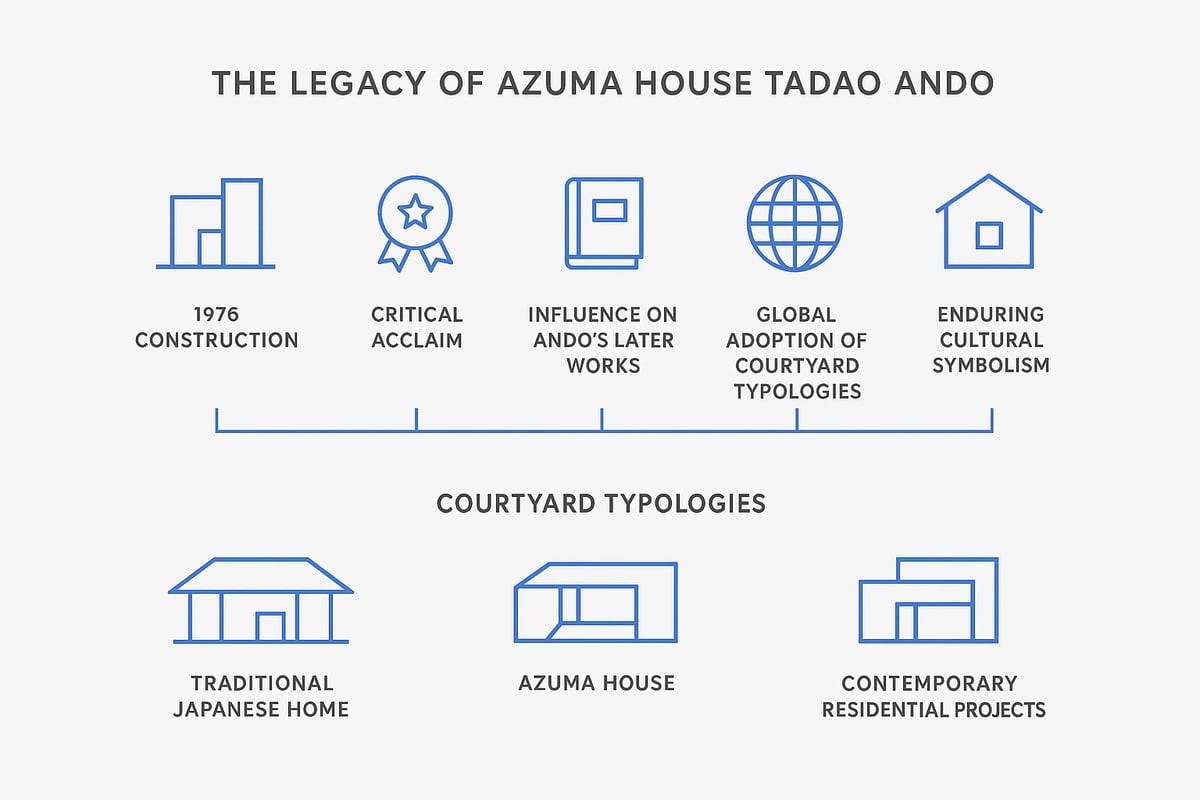
Upon its completion in 1976, azuma house tadao ando immediately attracted attention from architectural critics and the public. Its stark concrete form, inward orientation, and minimalist ethos set it apart from typical Osaka residences.
The project’s innovative approach was quickly recognized, earning features in leading architectural journals and exhibitions. Azuma House was referenced in major institutions such as MoMA, the Centre Pompidou, and the Venice Biennale, placing Ando's work on the global stage.
Academic circles embraced the house as a case study in spatial innovation and urban adaptation. Its critical reception served as a launchpad for Ando’s international career, proving that even a small, private residence could have a monumental impact.
Influence on Tadao Ando’s Later Works
Azuma house tadao ando became a template for Ando’s future projects. The concept of the central void, the interplay of light and shadow, and the bold use of exposed concrete all reappear in his later masterpieces.
Notable examples include the Church of the Light and the Water Temple, where Ando refined his use of spatial abstraction and material purity. These projects continued to explore the relationship between built form and the natural elements, a philosophy first crystallized in Azuma House.
Ando himself often cites Azuma House as the foundational experiment for his architectural approach. Quotes from both the architect and leading scholars reinforce its role as a springboard for his celebrated body of work.
Broader Influence on Contemporary Residential Design
The principles established in azuma house tadao ando have reverberated across contemporary residential architecture, especially in dense urban environments. Architects worldwide have adopted inward-looking layouts, concrete shells, and central courtyards to create privacy and serenity amidst city chaos.
Minimalist and brutalist aesthetics, once considered niche, have surged in popularity thanks in part to Ando’s influence. Numerous homes now reference the spatial strategies pioneered in Azuma House, as highlighted in Azuma House's influence on modern architecture.
Data shows a marked increase in the use of concrete and courtyards in Japanese and global residential design. This broad adoption demonstrates the house’s enduring power to shape architectural trends and inspire new generations.
Enduring Symbolism and Cultural Resonance
Beyond its physical form, azuma house tadao ando stands as a powerful symbol of resilience and creative defiance. The house embodies Japanese values of simplicity, introspection, and harmony with nature, even in the heart of a bustling city.
Its legacy extends to academic curricula, public tours, and countless publications, ensuring its ongoing relevance. Azuma House is frequently cited in debates about urban living, sustainability, and the role of architecture in shaping human experience.
Today, the home remains a touchstone—a modern classic that continues to provoke thought and spark inspiration among designers, students, and the public alike.
Inspiration, Lessons, and Global Relevance
The enduring influence of azuma house tadao ando stretches far beyond its concrete walls in Osaka. This section unpacks the lessons, inspirations, and global impact that have made this home a lodestar for architects, urbanists, and design enthusiasts. Whether you are seeking practical insights, creative motivation, or a deeper understanding of urban living, the story of azuma house tadao ando offers a rich well of ideas to draw from.
Lessons for Architects and Designers
Azuma house tadao ando stands as a masterclass in transforming constraints into creative opportunity. For architects and designers, the project's compact site, measuring just 57 sqm, is a vivid reminder that limitations can spark innovation. Ando’s approach demonstrates the power of minimalism to create spaces that feel expansive and serene, even in the heart of a bustling city.
Key takeaways for practitioners include:
- Embrace site challenges: Use narrow or awkward plots to inspire new spatial solutions.
- Prioritize spatial clarity: Minimalist layouts, like the three-part division in azuma house tadao ando, foster both order and emotional impact.
- Integrate nature elementally: When green space is scarce, focus on sunlight, air, and rain as core design components.
- Design for ritual and experience: Daily movement through the courtyard transforms routine into meaningful engagement with space.
- Champion material honesty: Exposed concrete and simple details highlight structure and craft.
Ando’s reinterpretation of the traditional Japanese home, using modern materials and bold abstraction, encourages today’s designers to rethink tradition in light of contemporary needs. For a deeper dive into his design philosophy and distinctive style, explore Tadao Ando's architectural style.
Azuma House as a Model for Urban Living
In an age of rapid urbanization, azuma house tadao ando serves as a blueprint for peaceful, livable homes in dense cities. The inward-facing layout shields residents from noise and prying eyes, creating a protected oasis amid the urban rush. The central courtyard, acting as a light well and social heart, demonstrates how even the smallest homes can offer moments of openness and connection to nature.
Key strategies inspired by azuma house tadao ando include:
- Maximize privacy: Solid exterior walls and inward orientation ensure refuge from urban chaos.
- Utilize courtyards: A central void brings daylight, air, and a sense of calm to compact homes.
- Promote sustainable living: Efficient use of space and resources aligns with contemporary sustainability goals.
- Enhance well-being: Thoughtful spatial design can ease stress and foster mindfulness.
Designers around the world have adapted these principles to micro-housing, urban infill, and new interpretations of the courtyard home. For more context on how such ideas shape modern residences, see recent residential architecture projects that draw on similar philosophies.
Cross-Cultural and Global Architectural Impact
The ripple effect of azuma house tadao ando is apparent in cities far beyond Osaka. Architects from Europe to the Americas have referenced its minimalist forms, inward focus, and elemental materiality in their own residential projects. The universal appeal lies in its balance between enclosure and openness, tradition and innovation.
Case studies from around the globe show how Ando’s principles are adapted to diverse climates and cultures. For example, homes in Mexico City, Berlin, and Los Angeles have incorporated courtyards, concrete shells, and ritualized movement inspired by azuma house tadao ando. Academic programs across continents use the project as a benchmark for teaching spatial choreography and urban response.
A comparison table of international projects influenced by azuma house tadao ando:
| Project Name | Location | Key Element Adopted |
|---|---|---|
| Casa Ventura Maza | Mexico City | Central courtyard, concrete |
| House NA | Tokyo | Inward focus, minimalism |
| Urban Villa | Berlin | Privacy, spatial layering |
| LA Courtyard House | Los Angeles | Void as social hub |
This global resonance cements azuma house tadao ando as a touchstone for cross-cultural architectural dialogue.
Continuing Inspiration in Art, Media, and Academia
Azuma house tadao ando continues to inspire new generations through books, documentaries, and design exhibitions. Its presence in academic syllabi and student projects attests to its status as a living case study in architectural excellence. The house’s interplay of light and shadow, its poetic abstraction of nature, and its radical response to urban density have made it a favorite subject for artists and theorists alike.
Design magazines and media outlets regularly feature azuma house tadao ando, highlighting its timeless relevance. Public and academic tours allow visitors to experience firsthand the emotional power of its spaces. This ongoing attention ensures that the lessons of azuma house tadao ando remain fresh, motivating both established architects and aspiring designers to rethink what is possible in urban living.
Tadao Ando: The Architect Behind Azuma House
Tadao Ando is a name synonymous with poetic minimalism and transformative spatial design. His work on azuma house tadao ando not only redefined urban living but also set a new benchmark for modern architecture worldwide. Understanding the man behind this iconic residence reveals why his vision continues to inspire architects and design enthusiasts across generations.
Personal History and Path to Architecture
Tadao Ando was born in Osaka in 1941, growing up in a working-class neighborhood shaped by postwar reconstruction. His early years were marked by hands-on experiences as a carpenter’s apprentice, and even a stint as a professional boxer. This practical background fostered a deep respect for craftsmanship and discipline.
With no formal architectural training, Ando educated himself by studying architectural books, sketching buildings, and traveling across Japan and Europe. He absorbed lessons from traditional Japanese design and the works of Western masters, fueling his ambition to create something unique. By 1969, he founded his own firm, determined to challenge conventional norms with projects like azuma house tadao ando.
Design Ethos and Core Principles
At the heart of Ando’s vision for azuma house tadao ando is a commitment to spatial purity, simplicity, and a profound dialogue with nature. He believes architecture should evoke emotion through natural light, tactile materials, and the orchestrated movement of people through space. Ando’s work is a testament to the power of abstraction, where concrete, glass, and voids become tools for introspection and harmony.
His ethos aligns with the belief that true architectural excellence lies in thoughtful innovation and emotional resonance. For a deeper dive into how such philosophies drive transformative design, explore these insights into architectural excellence.
Major Works and Recognitions
Beyond azuma house tadao ando, Ando’s portfolio includes global landmarks such as the Church of the Light in Ibaraki, the Water Temple on Awaji Island, and the Modern Art Museum of Fort Worth in Texas. His minimalist yet deeply experiential spaces have garnered worldwide acclaim.
Ando’s achievements include the prestigious Pritzker Prize (1995), the Praemium Imperiale, the RIBA Gold Medal, and the AIA Gold Medal. He has shared his knowledge through teaching positions at Yale, Harvard, and the University of Tokyo, and his works have been featured in exhibitions at MoMA, Centre Pompidou, and the Venice Biennale.
Lasting Influence and Philosophy in Practice
The influence of azuma house tadao ando extends far beyond its physical site. Ando’s approach has inspired generations of architects to embrace site constraints, material honesty, and the interplay between light and shadow. His philosophy emphasizes architecture’s ability to shape human experience and foster moments of contemplation.
Today, Ando continues to work on new projects, mentor young designers, and reflect on architecture’s evolving role in society. Azuma House remains a touchstone in his career, embodying the values and aspirations that define his enduring legacy.
After exploring how Azuma House redefined modern architecture through daring design and pure intention, it’s hard not to feel inspired to reimagine your own spaces. Whether you’re dreaming up a tranquil urban sanctuary or a bold, innovative home, you don’t have to figure it all out alone. At WL3 Designs, I help you turn vision into reality—from feasibility studies to permit ready plans—so your project stands out for all the right reasons. If Azuma House has sparked new ideas for your next build, why wait? Schedule A Consultation
and let’s bring your architectural dreams to life together.
.
WL3 Designs Blog